Have a Question about JIIT?
Chat with VIDYA
Chat with VIDYA
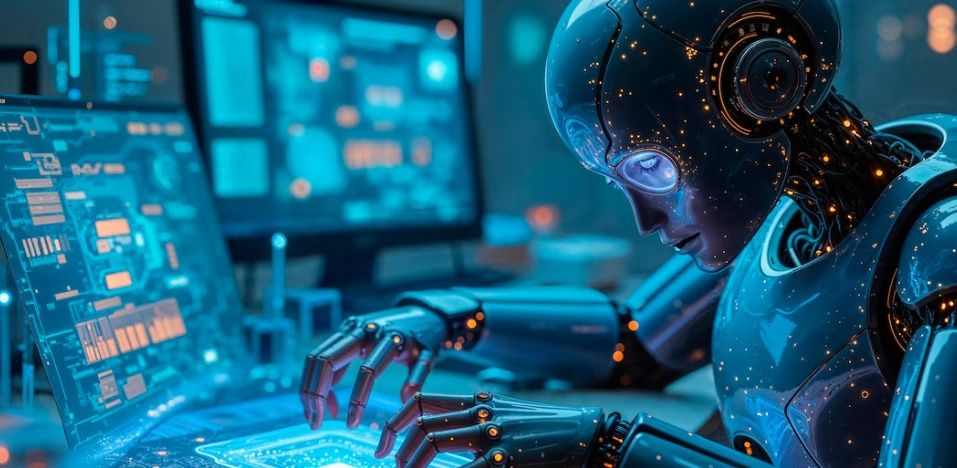


Engineering trends change fast. A decade ago, students rushed toward traditional computer science streams because software development was an obvious future. But today, the conversation has shifted. Artificial intelligence powers recommendation systems, healthcare diagnostics, fraud detection, autonomous systems, and even the apps people use every day without thinking twice.
This transformation is changing how students look at engineering careers. Students are not just asking, "Which branch is safe?" but also, "Which branch will still remain relevant ten years from now?" That is where the course B.Tech in AI and ML enters as the answer. This is one of the most sought-after engineering programs for students planning their future in 2026 and beyond. Read on to discover what students study in AI and ML and what kind of real-world career opportunities open up after graduation.
Artificial Intelligence and Machine Learning are no longer just side technologies used to support software systems; now they are becoming the system itself. Today AI models are making decisions, analysing patterns, and automating processes at a scale impossible for humans alone.
NASSCOM’s industry report and the World Economic Forum show that India is expected to see significant growth in AI-driven job roles across sectors, including finance, healthcare, manufacturing, logistics, and cybersecurity. This growing demand has created strong academic interest in specialised engineering programs focused completely on AI and ML rather than teaching them as optional subjects under conventional computer science degrees.
This is why students who are exploring engineering pathways are considering a B Tech in AI and ML as a long-term career investment instead of simply following traditional streams.
Before diving deep, let’s clear one common misconception: AI engineering does not mean students will only learn coding or work with robots. In fact, this field also combines mathematics, computer science, logic and data interpretation. The academic structure usually begins with strong computational fundamentals before moving into intelligent systems and advanced machine learning applications.
Some core subjects generally include:
What makes this course unique is the balance between theory and practical implementation. Through this course, students understand not just how systems work but also why models make certain predictions or decisions. Institutes like Jaypee Institute of Information Technology focus on project-based learning, hackathons, and industry exposure, often helping students gain a stronger grasp of real-world applications instead of limiting education to classroom theory.
In AI engineering, technical curriculum is not the only thing that matters. The industry values adaptability and problem-solving just as much as programming knowledge. Students entering this domain develop a combination of analytical and applied skills, like:
Problem-solving and logical thinking: As AI systems are built to solve problems, engineers are expected to break complex issues into smaller logical structures and train systems to identify patterns.
Strong mathematical foundation: Machine learning algorithms heavily depend on statistics, linear algebra, and probability. Students who are comfortable with analytical thinking often adapt better to this field.
Programming proficiency: Languages like Python, Java, and R are commonly used in AI development. But coding in this field is less about syntax memorisation and more about building scalable intelligent systems.
Data Interpretation: AI models are only as effective as the data they process. Engineers need to understand how to clean, analyse, and interpret data to improve model accuracy.
Communication and Collaboration: Most AI projects involve cross-functional teams consisting of developers, analysts, business teams, and researchers. Technical communication becomes essential in collaborative environments.
At reputed institutions like Jaypee Institute of Information Technology (JIIT), the focus on internships, technical events, and industry interaction helps students strengthen these practical capabilities alongside academics.
Right now, India’s technology sector is undergoing a major transition. Businesses are shifting toward intelligent automation. Hence, AI-related hiring is expanding far beyond multinational tech companies.
Now AI and ML professionals are being hired across:
Common career roles include:
The one thing that makes this field more attractive is its scalability. Students can move into research, development, consulting, analytics, entrepreneurship, or even interdisciplinary domains like healthcare AI and smart manufacturing.
The salary potential also reflects the growing demand. While compensation naturally depends on skill level and institution, AI-related roles are among the higher-paying opportunities available to engineering graduates today.
Textbooks alone are not enough to master AI engineering. The most preferred graduates are the ones who have worked with datasets, participated in coding competitions, contributed to projects, or solved practical business problems during internships. This is where an institution’s ecosystem plays an important role.
Being located in a technology-driven region and a hub of IT companies at Noida, enables students to access a stronger innovation network, startup culture and internship ecosystem. These industry interactions and peer learning environments help shape a student’s growth. JIIT’s focus on research orientation, modern infrastructure, and practical learning creates an ecosystem where students can engage with emerging technologies in a more applied and industry-relevant manner.
Whether it is predictive healthcare, smart mobility, financial modelling, or cybersecurity, intelligent systems are now integrated into everyday operations. But that doesn’t mean AI will replace every profession. It means that professionals who understand AI systems will increasingly shape the future of industries. For students, this makes AI and ML engineering less of a trend and more of a long-term technological shift.
The field is also evolving continuously with new tools, frameworks, and innovations, making it ideal for students who enjoy learning and adapting rather than staying confined to static job roles.
Choosing an engineering college is not only about the branch itself. The surrounding ecosystem matters equally. Students pursuing AI and ML benefit most from universities that offer:
As students begin exploring B Tech admission 2026, the focus should move beyond generic rankings toward institutes that actively support emerging technology education.
Artificial intelligence and machine learning engineering represent more than just another specialised branch of computer science. They reflect where the global technology ecosystem is heading.
For students interested in innovation, intelligent systems, analytics, and future-focused careers, this field provides a combination of technical depth and long-term opportunities. But success in AI engineering depends heavily on the learning environment students choose during their undergraduate years.
With its technology-driven academic culture, research-orientated ecosystem, and strong industry exposure, JIIT continues to remain a strong launchpad for students planning to build careers in emerging engineering domains. For students planning their next academic step, exploring institutes that combine modern curriculum with practical exposure can make all the difference in shaping a future-ready engineering career.

 Old Website