Registration instructions 1st year (UG Programs on 14 July & PG Programs on 23 July)View HereCareer OpeningsApplyList of Hostellers - 1st YearView Here
m tech electronics engineering vlsi design and tech
M.Tech in VLSI Design
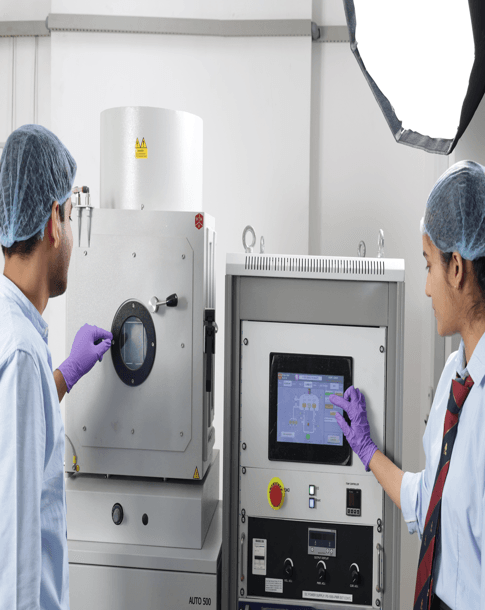
The M.Tech in VLSI Design program is designed to equip students with advanced knowledge and hands-on expertise in the rapidly growing field of Very Large-Scale Integration (VLSI) and semiconductor technology. The M.Tech in VLSI Design program blends a rigorous theoretical foundation with extensive practical training, enabling students to master both the design and implementation aspects of modern integrated circuits. The curriculum covers a comprehensive range of subjects, including digital and analogue IC design, semiconductor device modelling, FPGA-based design, VLSI CAD tools, verification methodologies, and system-on-chip design approaches. Students gain exposure to state-of-the-art laboratories and industry-standard software such as Cadence, Synopsys, Mentor Graphics, and MATLAB, ensuring they are job-ready and aligned with the latest technological advancements. In addition, the M.Tech in VLSI Design program emphasises research-driven learning, encouraging students to engage with emerging areas like low-power design, AI/ML applications in VLSI, advanced packaging, and nanotechnology.
Through project-based learning, internships, and lab-oriented coursework, students of M.Tech in VLSI Design not only build strong technical competence but also develop problem-solving skills and innovation-driven thinking. This holistic approach prepares graduates to take on complex design challenges in the semiconductor industry. Career opportunities after completion of the program are diverse and rewarding. Graduates are well-positioned for roles in semiconductor companies, EDA tool developers, design service providers, and research organizations, as well as for pursuing doctoral studies in leading universities worldwide. The program creates a skilled talent pool capable of contributing to critical areas such as chip design, verification, fabrication support, and VLSI automation workflows.
Curriculum Structure
Curriculum has been carefully designed to meet the objectives as mentioned earlier. We understand that in order to cater the demands of the market and meet the challenges of the future the curriculum is subjected to change.

 Old Website
 Important Announcements:

 Academic Year 2025-26