Have a Question about JIIT?
Chat with VIDYA
Chat with VIDYA
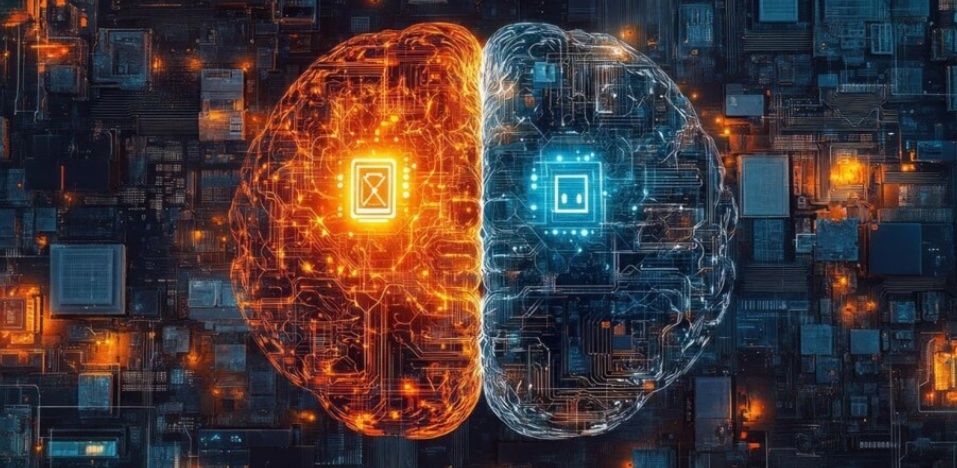


“What should I specialise in?" This question has become one of the biggest concerns for engineering students in 2026.
Years ago, choosing computer science itself would have been enough. But today, that is only the starting point. The real decision lies deeper: should you move towards cybersecurity, artificial intelligence, or data science? All three fields are shaping the future of technology, dominating hiring conversations, and attracting strong salary packages. Yet, they demand very different thinking styles, skill sets, and career goals.
That’s why students are now spending more time comparing domains instead of simply chasing degrees. The industry no longer rewards generic technology knowledge alone, it rewards specialised capability. One institute preparing students for this shift is Jaypee Institute of Information Technology (JIIT).
If you are confused between Cybersecurity, AI, and Data Science, this guide breaks down the key differences between these fields, their future scope, career opportunities, and how to decide which path actually aligns with your strengths.
Today, almost every major industry depends on digital infrastructure. Banks rely on AI-driven fraud detection. Healthcare uses predictive data analytics. E-commerce platforms run on recommendation engines. This convergence has created an unusual situation where all three domains are expanding simultaneously.
Recent industry reports suggest that India’s AI market is expected to grow rapidly over the next few years, while cybersecurity spending is increasing because of rising digital threats. At the same time, businesses are struggling to find professionals who can manage large-scale data systems.
The result? Students now have multiple high-growth engineering opportunities instead of one conventional path. However, along with growth, the nature of work matters equally.
Cybersecurity focuses on protecting systems, networks, applications, and data from cyber threats. In simple terms, cybersecurity professionals build and manage digital defence systems. As businesses increasingly rely on cloud infrastructure, remote work systems, and AI-based solutions, cyber threats have become more sophisticated than ever. This has made cybersecurity a core business necessity from simply being an optional IT department across organisations in various industries.
Students interested in ethical hacking, network systems, digital forensics, cryptography, and security architecture often find this field exciting. More importantly, cybersecurity is no longer limited to defence organisations or government agencies. Today, almost every sector hire security professionals, including:
This extensive demand is also why interest in specialised postgraduate education is increasing rapidly. Students who are looking for the best MSc cyber security colleges are now prioritising institutes that provide real-world security exposure, labs, and industry-focused projects instead of purely theoretical learning.
At institutions like JIIT, the focus on practical exposure, interdisciplinary learning, and updated technical education creates an environment aligned with how modern cybersecurity actually functions in the industry.
This field may suit students who:
Some major career options include:
As cybercrime is a global concern, cybersecurity remains one of the most stable and future-focused engineering careers.
Artificial intelligence is no longer just experimental technology. Today, it is a mainstream infrastructure that powers chatbots, autonomous systems, recommendation engines, predictive analytics, and even software development tools.
Unlike traditional programming, AI systems learn patterns from data and improve over time. That makes AI both technically challenging and creatively exciting. Engineering students entering AI are not just learning to code; they are learning how machines simulate decision-making. This includes machine learning, neural networks, computer vision, natural language processing, and automation systems.
What makes AI especially attractive in 2026 is its cross-industry relevance. AI is influencing finance, healthcare, education, logistics, media, manufacturing, and even agriculture. However, AI is also mathematically intensive. Students need to be comfortable with statistics, algorithms, logic, and continuous experimentation.
AI may suit students who:
Some major AI roles include:
AI careers evolve rapidly, which means continuous learning naturally becomes part of the profession.
Data science sits at the intersection of business strategy, programming, and analytics. While AI focuses on building intelligent systems, data science focuses on extracting useful insights from massive datasets.
Modern businesses collect enormous amounts of data every second. The real challenge is not collecting data; the actual challenge is to understand and use it. That is where data scientists become valuable. They help organisations predict trends, improve operations, understand customer behaviour, and make better decisions.
This field combines programming, statistics, visualisation, and business intelligence. Students pursuing this path often explore predictive analytics, data engineering, statistical modelling, and machine learning foundations.
Many students exploring advanced technical education are also considering an MTech in Data Science because companies increasingly prefer professionals who can translate raw data into strategic business impact.
Data science is ideal for students who:
Common roles include:
One of the biggest advantages of data science is flexibility, since data-driven decision-making is now relevant across nearly every industry.
Many students confuse these fields because they overlap within the technology ecosystem. But in reality, their core focus areas are very different.
| Field | Core Focus | Best For Students Who Enjoy |
| Cybersecurity | Protecting systems and data | Networks, ethical hacking, defence systems |
| Artificial Intelligence | Building intelligent systems | Algorithms, automation, innovation |
| Data Science | Extracting insights from data | Analytics, statistics, business intelligence |
The real question is not "Which field pays the highestsalary?" A better question is “What type of problems do you enjoy solving every day?”
Because long-term success in engineering usually comes from alignment between aptitude and domain, not trend-following.
Along with specialisation, the learning environment matters equally. Students entering future-focused engineering domains should evaluate institutes based on its curriculum, research exposure, industry projects and internships, experience of faculty, innovation culture, technical labs and infrastructure, and placement ecosystem.
This is where the institutes located within an active technology environment gain an advantage. JIIT, located in Noida’s expanding tech corridor, benefits from strong industry exposure and an evolving academic structure designed around emerging technologies rather than outdated engineering models.
For students exploring MSc cyber security colleges, practical learning exposure has become just as important as the degree itself.
There is no universally “best” engineering field in 2026. Cybersecurity, AI, and data science are all powerful career paths, but they reward different types of thinkers. Cybersecurity suits protectors, AI suits innovators, and data science suits interpreters. The smartest decision is not choosing the trendiest field but choosing the one that matches your curiosity strongly enough to sustain years of learning and growth.
And while domain selection matters, the learning environment matters just as much. Institutions like JIIT combine technical depth, research orientation, practical exposure, and industry connections to create better outcomes for students entering technology careers.

 Old Website