Have a Question about JIIT?
Chat with VIDYA
Chat with VIDYA


If you’re in Class 12 right now and planning your B.Tech journey, you’ve probably heard this a hundred times - “Computer Science is the future.” Computer Science Engineering is not just coding or software development; over time, it has evolved into a dynamic field that continuously adapts to technological advancements and industry demands.
For students planning to pursue engineering from reputed institutes like Jaypee Institute of Information Technology (JIIT), understanding future trends is crucial when choosing a stream. So, what does the future of Computer Science Engineering really look like?
The real question is not whether you should choose Computer Science, but what areas within Computer Science you should prepare for. In this blog, let us take a closer look at the future of Computer Science and the trends driving it, so you can make a well-informed decision while planning for B.Tech admissions in 2026.
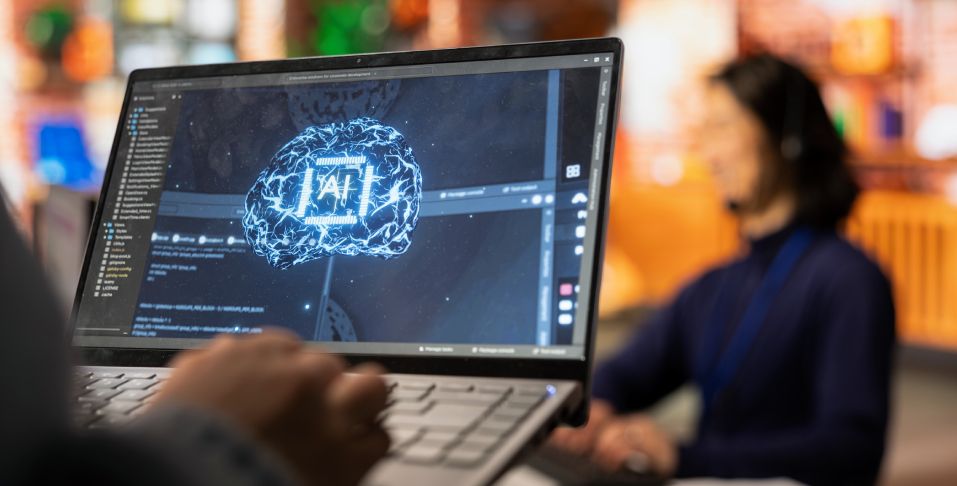
Computer Science is no longer just about coding. Today, coding is considered a foundational skill. One of the most evident trends in recent years has been the rapid growth of Artificial Intelligence (AI) and Machine Learning (ML). From recommendation systems to autonomous technologies, AI is transforming industries across the board.
Now, the shift is clear, and students are expected to:
Therefore, students entering Computer Science today are expected to go beyond basic programming and develop skills in:
This shift is making AI and ML key focus areas in engineering education. To support this vision, students now have the exceptional chance to experience industry-grade supercomputing facilities on campus, which are developed to handle intricate AI models and massive data simulations, in order to support this objective.
You don’t need to become an “AI expert” from day one. But you do need to understand how AI works and where it is applied. Students who combine core programming with AI understanding are already ahead of the curve.
As digital transformation accelerates, so do concerns around data privacy and security. Organisations are investing heavily in cybersecurity to protect sensitive information.
This has created a strong demand for professionals who understand:
For students, this means cybersecurity is becoming a critical specialisation area.
In recent times, the way companies store and manage data has changed significantly. Cloud platforms are now the backbone of most digital services.
Future engineers will need to be comfortable working with:
This trend highlights the importance of hands-on technical exposure during your college years.
One thing we often tell students is that your specialisation matters just as much as your college choice. At Jaypee Institute of Information Technology, the range of B.Tech programs reflects exactly where the industry is heading today. While traditional branches like Computer Science Engineering (CSE), Information Technology (IT), and Electronics and Communication Engineering (ECE) continue to build strong fundamentals, newer and more focused programs such as Artificial Intelligence & Machine Learning, Robotics and Artificial Intelligence, Cyber Security, and Mathematics & Computing are designed to align directly with emerging industry needs.
For students, this means you’re not just choosing engineering - you’re choosing a future-ready career path. Indeed, students who succeed are not just who follow the syllabus, but those who understand where the industry is moving.
If you align your learning with these emerging trends and choose the right academic environment, you can build a future-proof career.
Apply now:
https://docs.google.com/forms/d/e/1FAIpQLSe9QAyoX4xmanZZrUOLEu4qUQ3iZz7IfjMmODcXwrp2LR87wQ/viewform

 Old Website